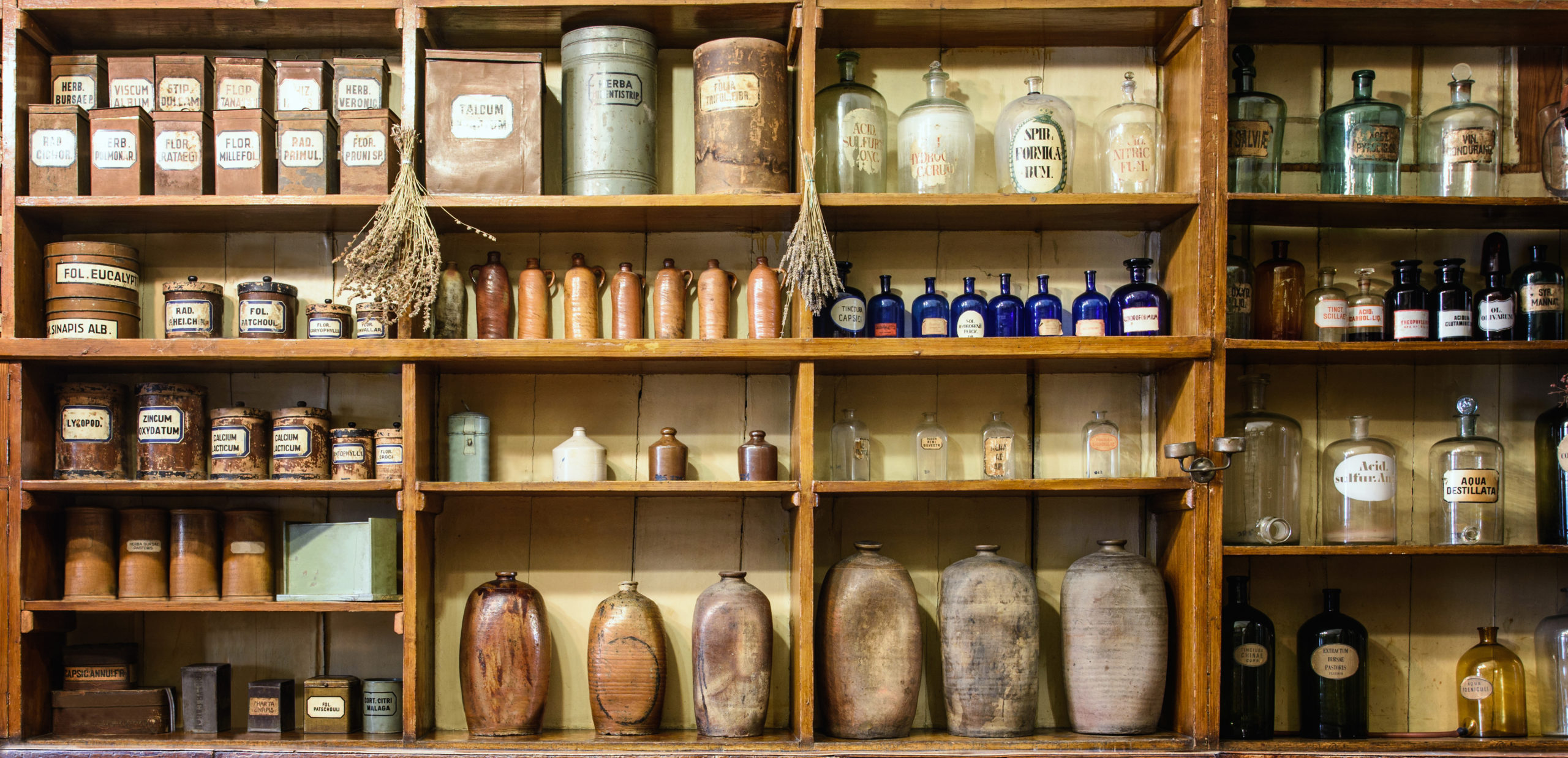
From “Witchcraft” to White Coats. How Pharmacy Became a Science.
Ever wonder why that local drugstore is called a “pharmacy” or why the pharmacist wears a white coat? The pharmacy profession didn’t start with insurance paperwork and plastic bottles, but with ancient clay tablets, trial and error, and some surprisingly effective “witchcraft.”
Let’s see how we went from crushing leaves in a cave to high-tech labs.
It All Started with “The Great Experiment”
Long before we had clinical trials, our ancestors were the ultimate guinea pigs. Ancient civilizations in Mesopotamia(around 2100 BCE) were the first to write down their “recipes.” They’d take things like mustard, pear, and cedar bark, grind them up, and hope for the best.
In Ancient Egypt, things got even more official. The Ebers Papyrus is basically the world’s oldest “How-To” guide for medicine. It listed over 800 prescriptions. Some of it was genius, like using honey as an antiseptic, and some of it was questionable, using lizard blood for eye infections.
Greece and the Birth of “Materia Medica”
Around 100 CE, a Greek physician named Dioscorides wrote De Materia Medica. This was the “Pharmacist’s Bible” for the next 1,500 years. He traveled with Roman armies, studying plants and minerals across the world.
The Greeks also gave us the word pharmakon, which has a double meaning of “remedy” and “poison.” It’s a great reminder that the difference between a cure and a disaster is often just the dosage.
Baghdad: Where Pharmacy Became a Career
For a long time, the person who diagnosed you was the same person who mixed your medicine. But in 8th-century Baghdad, things changed. During the Islamic Golden Age, scholars decided that making medicine was such a precise science that it needed its own specialists.
The first private drugstores opened there, and the “Apothecary” was born. These early pharmacists were masters of distillation and chemistry, turning bitter herbs into syrups and “elixirs”.
The Big Breakup
Fast forward to 1231. Emperor Frederick II issued an edict that officially legally separated medicine and pharmacy in Europe. Physicians were told to focus on the patient. Pharmacists were told to focus on the chemistry.
This created a system of checks and balances. The pharmacist became the final safety net to make sure the doctor’s “order” was literally safe to swallow.
From the Garden to the Lab
By the 1800s, things got scientific. Instead of just boiling whole plants, chemists started isolating the “active ingredients.” In 1806, a 21-year-old pharmacist’s apprentice isolated morphine from opium. Soon after, we got quinine for malaria and aspirin from willow bark.
Pharmacy moved out of the back garden and into the industrial lab. This paved the way for the 20th-century “Wonder Drugs” like penicillin, which changed human history forever.
The Modern Pharmacist
Today, pharmacy is less about grinding roots with a mortar and pestle and more about complex biochemistry, precision dosing, and patient care. Modern pharmacy also relies on highly specialized systems, including safe and accurate pharmacy packaging, to ensure medications are stored, labeled, and dispensed correctly.
In many ways, pharmacists are now one of the most accessible healthcare professionals, often serving as the first point of contact for questions about medications, vaccinations, and overall wellness. Their role blends science with human connection, continuing a tradition that has evolved over more than 4,000 years.
From Ancient Remedies to Modern Care
It’s easy to overlook something as routine as picking up a prescription, but behind that moment is thousands of years of progress. That evolution doesn’t stop at the medication itself. It also includes the development of reliable pharmacy packaging solutions that protect medications, ensure correct dosing, and support safe delivery from manufacturer to patient. That legacy continues today not only in pharmacies but also in the companies that support healthcare professionals behind the scenes.
At Samuels Products, that same commitment to quality, reliability, and innovation carries forward. As a trusted provider of pharmacy packaging and healthcare supplies, Samuels supports pharmacists and medical professionals with the essential tools they rely on every day.
